
refusing to abandon ship
learning to live in reality
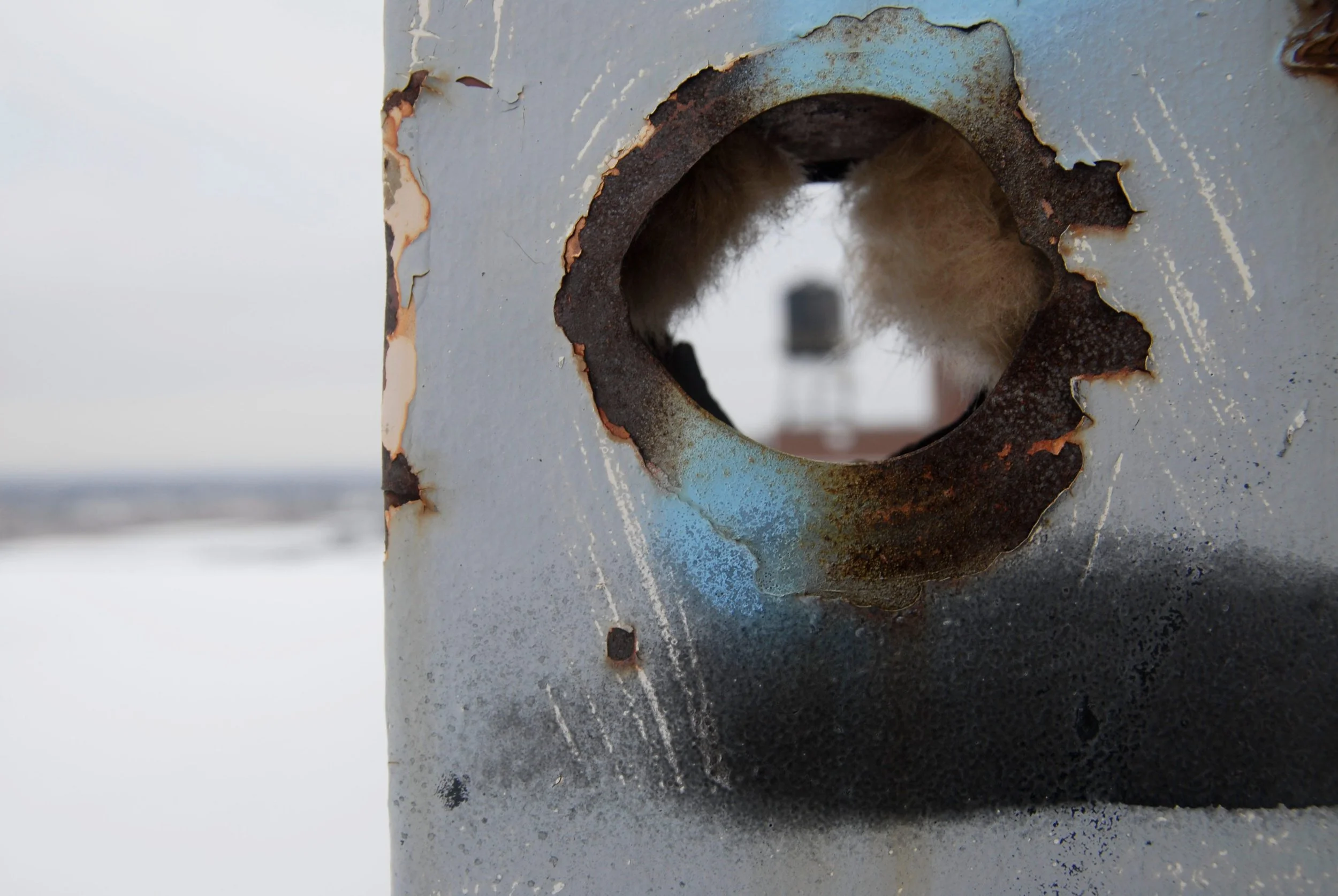
Chicago | winter, 2011
Recently, I found out that a fabric I’ve been using for years contains forever chemicals¹. This should’ve come as no surprise. I knew the fabric was originally developed by Dupont after all. You know, the heinous chemical giant? I hadn’t realized Dupont invented over a thousand chemicals that live under the “forever” umbrella. Or that these contaminants were used to treat fabric.
The fabric I use, known as Cordura, is a staple in the world of outdoor gear, heralded for its durability. The chemicals lie in its water resistant coating. I chose it because I want to make things that last. Truthfully, I dug no deeper.
When I first learned this information, I was filled with panic. I’d been using this fabric to make custom bags for people. I felt like I had duped, or god forbid, harmed them. My shame barometer blared off of the charts - bad bad bad. My next thought was to abandon ship altogether. Nevermind the yardage I owned or the dozens of feet I had screen printed. Trash it. Start over.
My inner critic had a field day.
I’m curious where this desire to “abandon ship” originated from. Has it always been a facet of my psyche? Is it the kind of fear only our current cancel culture can nurture?
I struggle with this.
The internet makes me feel like I need to know everything at once. Experts only. I can only show up if I’ve considered every side of every coin and can synthesize the entirety of my opinion in one tweet. Growth is diabolical. You must have already arrived.
You should’ve known.

I internalized similar expectations growing up in the punk scene.
I saw kids kicked out of shows for seemingly benign transgressions. Watching this unfold resulted in a deep personal policing of self.
But the scene was also an important teacher and in many ways built the bedrock of who I am. I’ll never forget seeing the queer punk band Limp Wrist in 2014. During their set, Martin, the lead singer, talked about how he was homophobic as a kid.²
“A lot of people come from a place that is hard to face when you look back at what we’ve done and said…It’s good to call people out on shit, but give people space and time, don’t scare them away…We have to give people space & time to grow.”
His words gave me so much solace.

The desire to abandon ship also assumes there’s a clear way out.
It says if I had just bought the right fabric, I could’ve avoided this entirely. The ethical shopper’s wet dream. It peddles perfection and purity, claiming a series of “good” choices can absolve me of collective sin. It pretends I can easily untether myself from networks of harm.
I see the folly in this. The obsessive individualism.
These delusions keep me stuck, keep me bowing to the same gods I claim to denounce.

The writer & theorist Alexis Shotwell calls purity (or purism) a “politics of despair”. She says it demobilizes us.
I’ve been there - riddled with indecision, tip toeing on imaginary egg shells.
But the floor is lava.
The whole floor is lava.
My entanglement with systems of oppression is already, always happening. To imagine I can somehow avoid them is to uphold their very structure.
I want to live courageously instead - to sit in my complicity and not give up, not turn away.

While researching for this piece, I read that forever chemicals can now be found in the blood of most humans³.
These chemicals call our bluff. They render our tools of separation useless. They do not speak our language of borders and walls. They don’t spare the rich or more virtuous.
They return us to a truer place. The one where we are all compromised; where our bloodstreams reflect our rivers; where our interdependence is palpable.
I’m learning to live here. In this contaminated body, making art with contaminated materials.
I do not want to look away.
I cannot afford to keep forgetting.
I refuse a politics of despair.
I refuse to abandon ship on this pale blue dot.
I want to belong to reality instead.
¹ Forever chemicals or PFAs (per- and polyfluoroalkyl substances) are synthetic chemicals that have been around since the 1940s. There are more than 4000 types, many of which are still unknown. One of their main functions is to make products water, stain or grease resistant. They can be found in a variety of products from non-stick pans to outerwear, cosmetics, disposable food containers, firefighting foam.
² Limp Wrist at Fed Up Fest in Chicago, 2014
³ The Guardian: The poison found in everyone…and who is responsible for it
References
Against Purity: Ethical Living in Compromised Times by Alexis Shotwell
Edge Effects: Forever Chemicals on the Ski Trail, A Conversation with Gail Carlson
Pretty Heady Stuff: Alexis Shotwell outs the lie of individual purity & encourages an entangled sense of responsibility
The New York Times Magazine: ‘Forever Chemicals’ Are Everywhere. What Are They Doing to Us?
The New York Times Magazine: The Lawyer Who Became Dupont’s Worst Nightmare